
Step 1
Choose the right weather and sea conditions
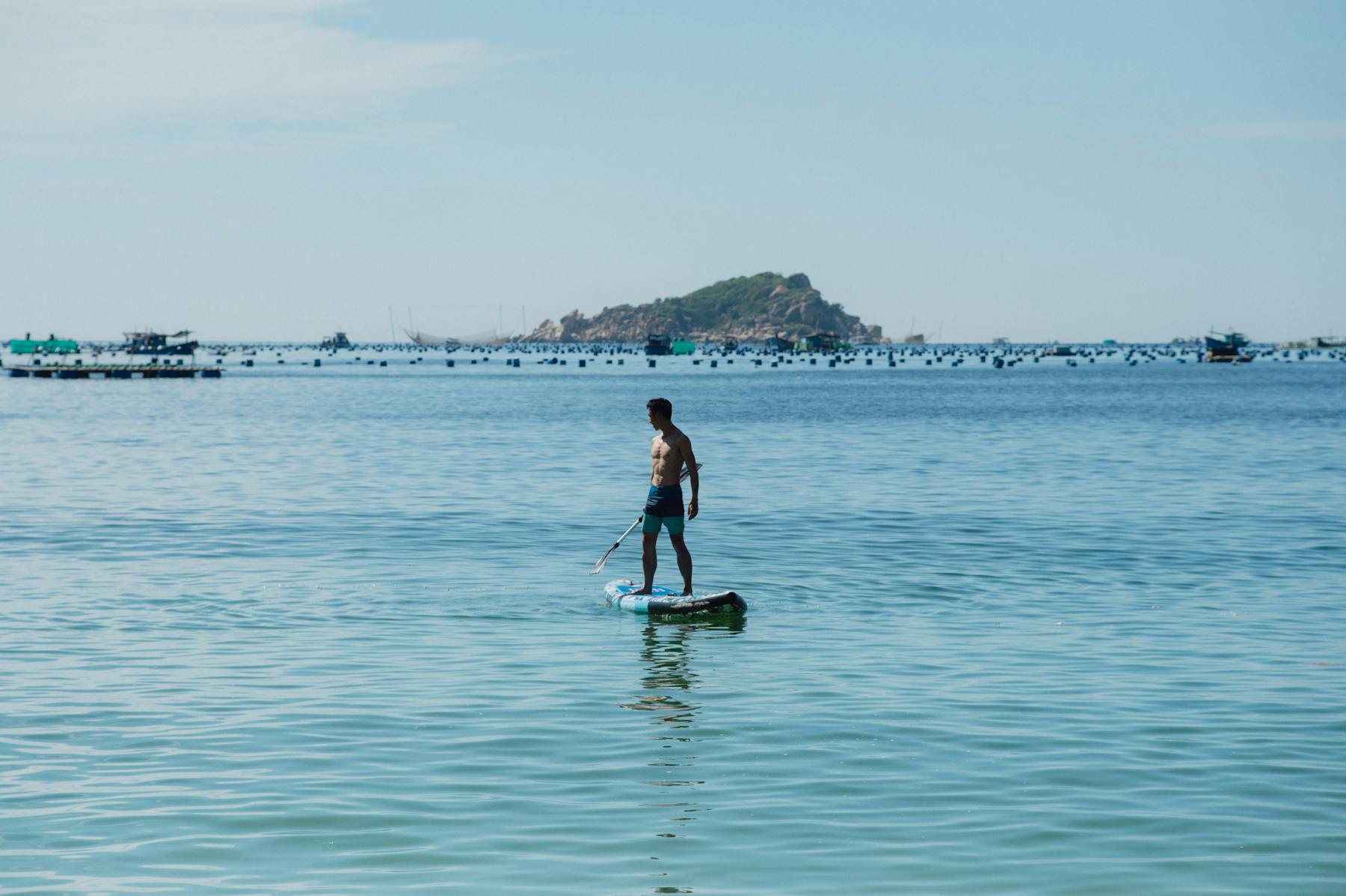
For a first session, morning hours with little wind and calm sea conditions should be preferred. Flat and comfortable water makes it much easier to find your balance.
Simple Guide For Beginners
Even if paddle boarding looks difficult at first, with the right technique it is easy and enjoyable. On this page you can find the basic steps in a simple format.
For First-Time Paddle Users
Paddle boarding is easier for beginners than it may seem. At the beginning, the goal is not speed but feeling your balance on the water. It is an experience most people get used to quickly.
On a first try, balance is usually found within a few minutes. Starting on your knees and standing up slowly makes the process easier. The best approach is to move without rushing.
Calm water is one of the biggest advantages for beginners. Paddle boarding in flat water with little wind feels safer and far more enjoyable.
For a first session, a short duration is usually the better option. This lets you get used to the feeling of paddle boarding without getting tired.
Over time, balance and control improve. Movements that seem difficult at first start to feel natural and smooth after a few sessions.
Step 1
For a first session, morning hours with little wind and calm sea conditions should be preferred. Flat and comfortable water makes it much easier to find your balance.

Step 2
Quiet coves and spots with easy access to the water are better for beginners. Areas with fewer crowds and more stable water make the first experience much easier.
Step 3
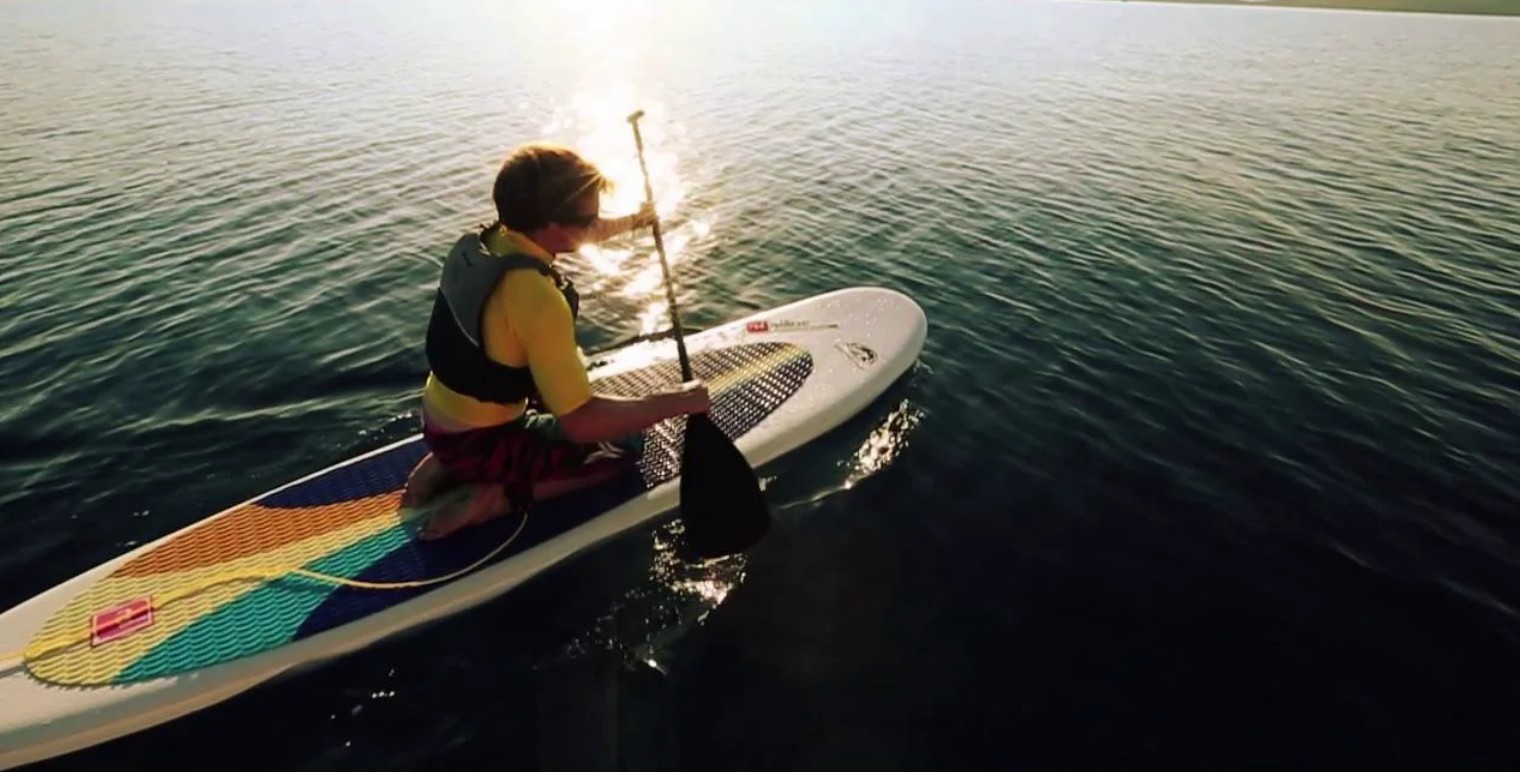
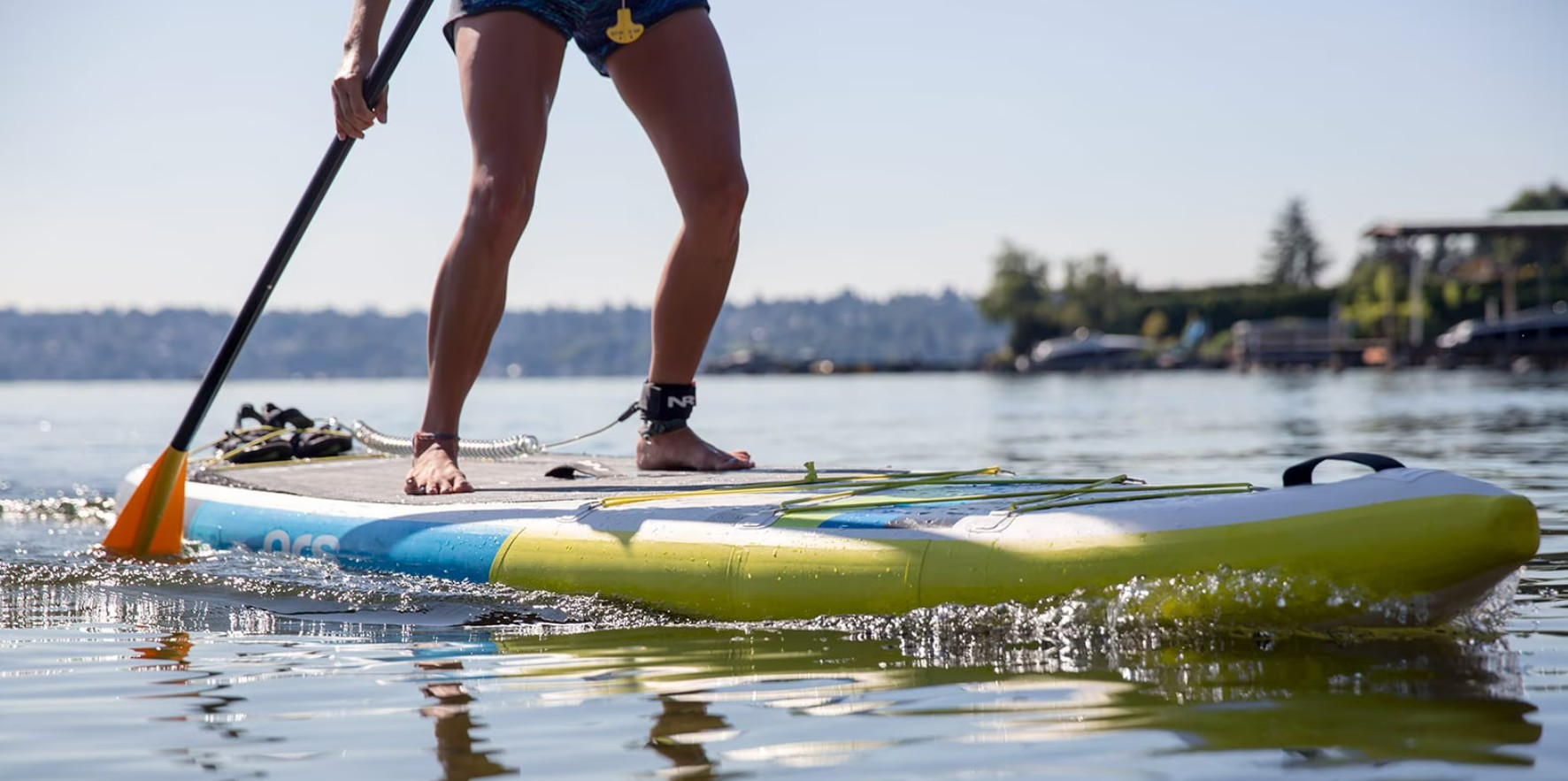
The paddle board is made ready for the water. The leash is attached to your ankle. After taking the paddle in your hands, you can begin in a controlled way by kneeling on the board.
Step 4
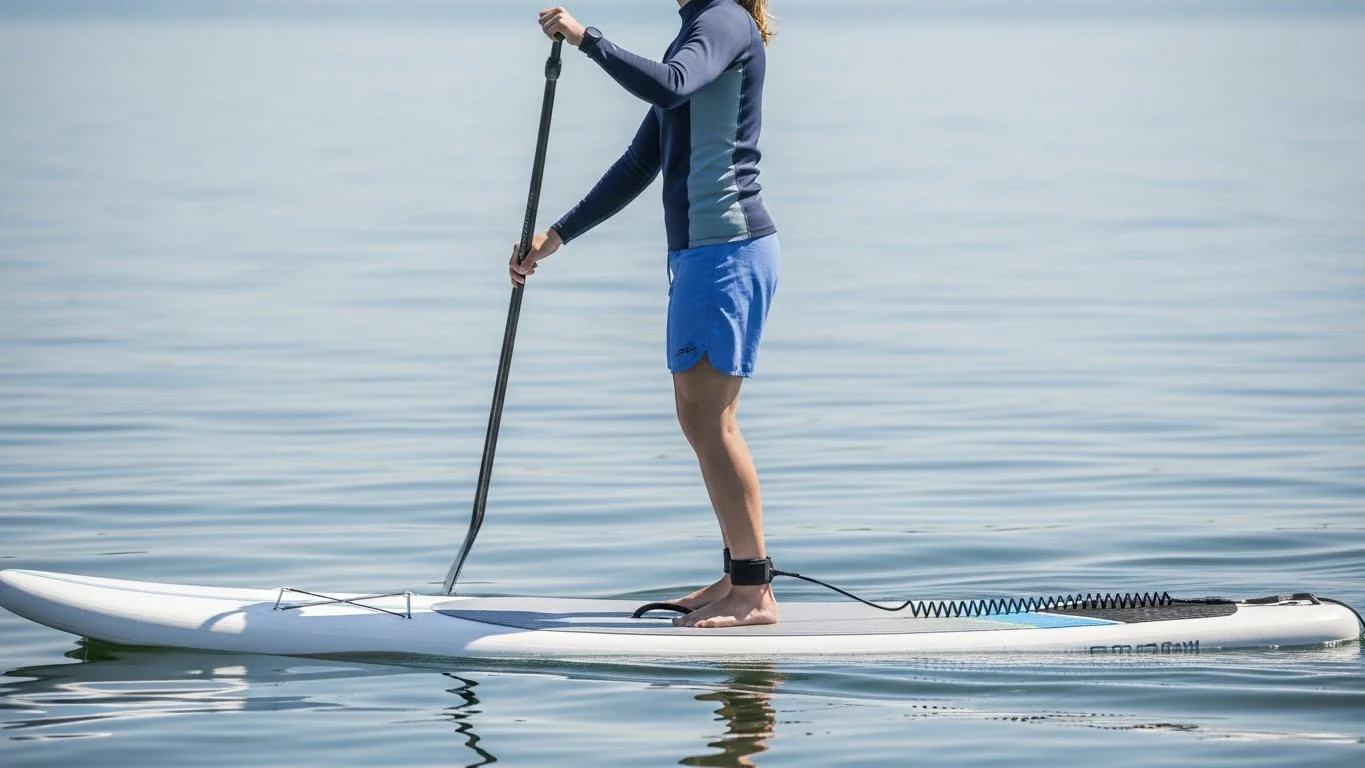
After feeling your balance while kneeling on the board, you can slowly stand up using the paddle for support. Your feet should be shoulder-width apart, knees slightly bent and your body kept balanced.
Step 5
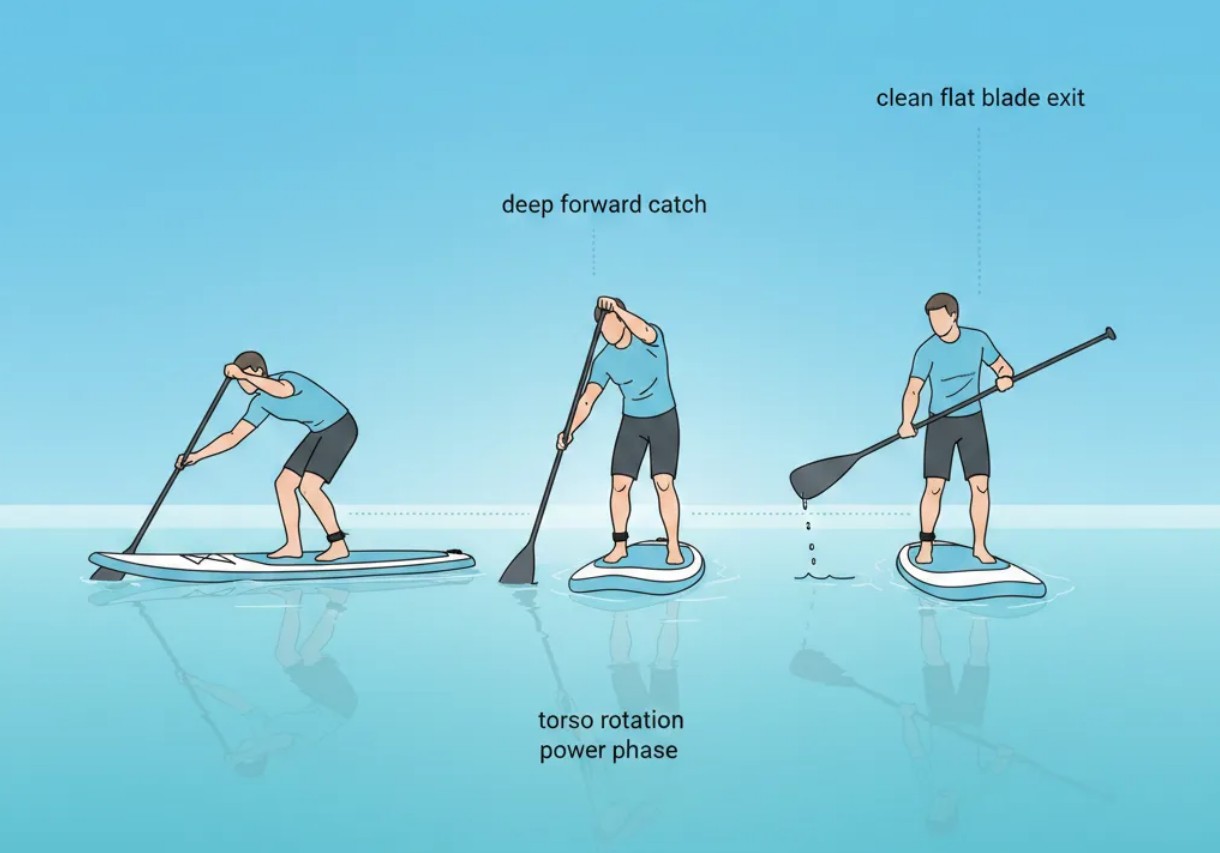
The angled side of the paddle should face forward. You can move ahead slowly and in control by pulling the water toward yourself.
Step 6
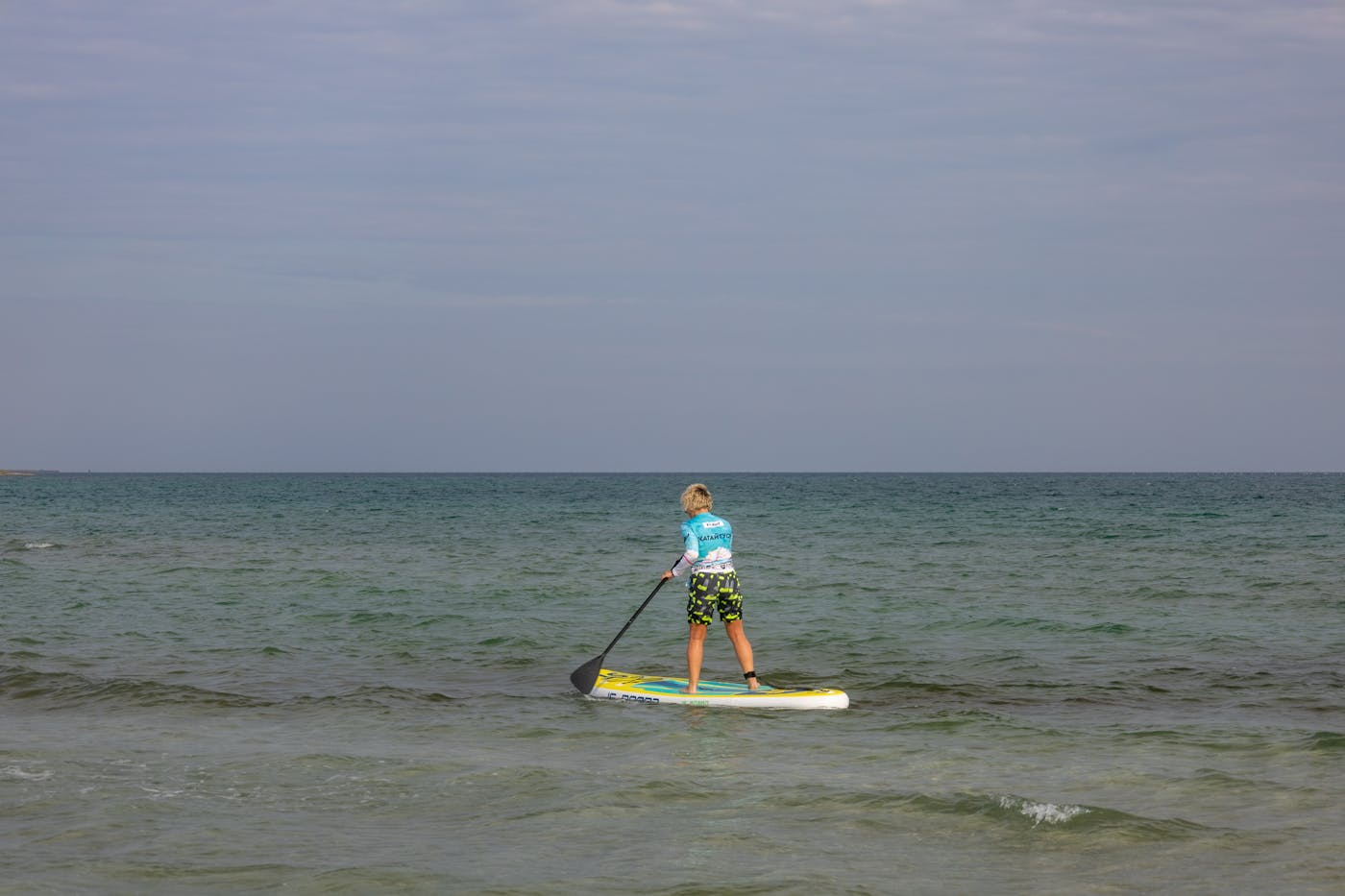
You can change direction by paddling on one side. For more balanced movement, switch paddle sides at regular intervals.
Step 7
Moving at a steady and calm pace helps protect your balance. Controlled movements create a smoother and more comfortable ride.
Step 8
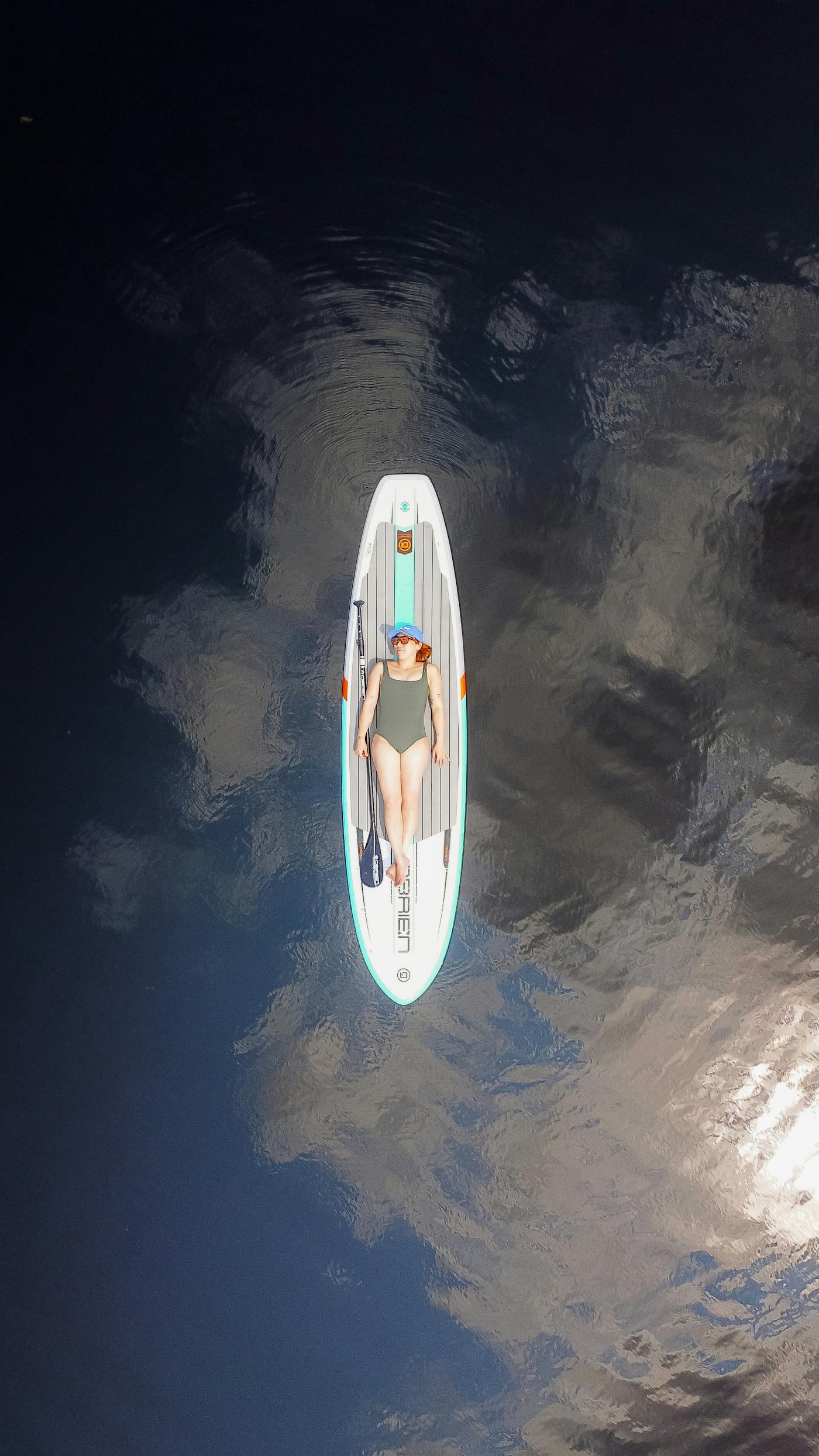
Instead of pushing too long on your first try, it is better to choose a short and enjoyable session. This way the experience feels pleasant rather than tiring.